
Elderberry Leaves Benefits: Essential Guide to Uses and Considerations
Quick answer. Discussions of elderberry leaves benefits usually refer to antioxidant activity and anti-inflammatory properties shown in laboratory models and to folk medicine uses on the skin. While elderberry leaves have been studied for their potential health benefit in laboratory settings, these findings do not mean they are safe for internal use. Do not ingest the leaves. Elderberry leaves, stems, and bark contain cyanogenic glycosides (cyanide-releasing compounds). For internal wellness (immune health, cold and flu), modern guidance focuses on elderberry flowers and fully cooked berries—not leaves.
Health Benefits (What the Evidence Really Says)
Elderberry plants, including several species such as Sambucus nigra (European elder) and Sambucus canadensis (American elder), have been valued for their medicinal properties in various cultures.
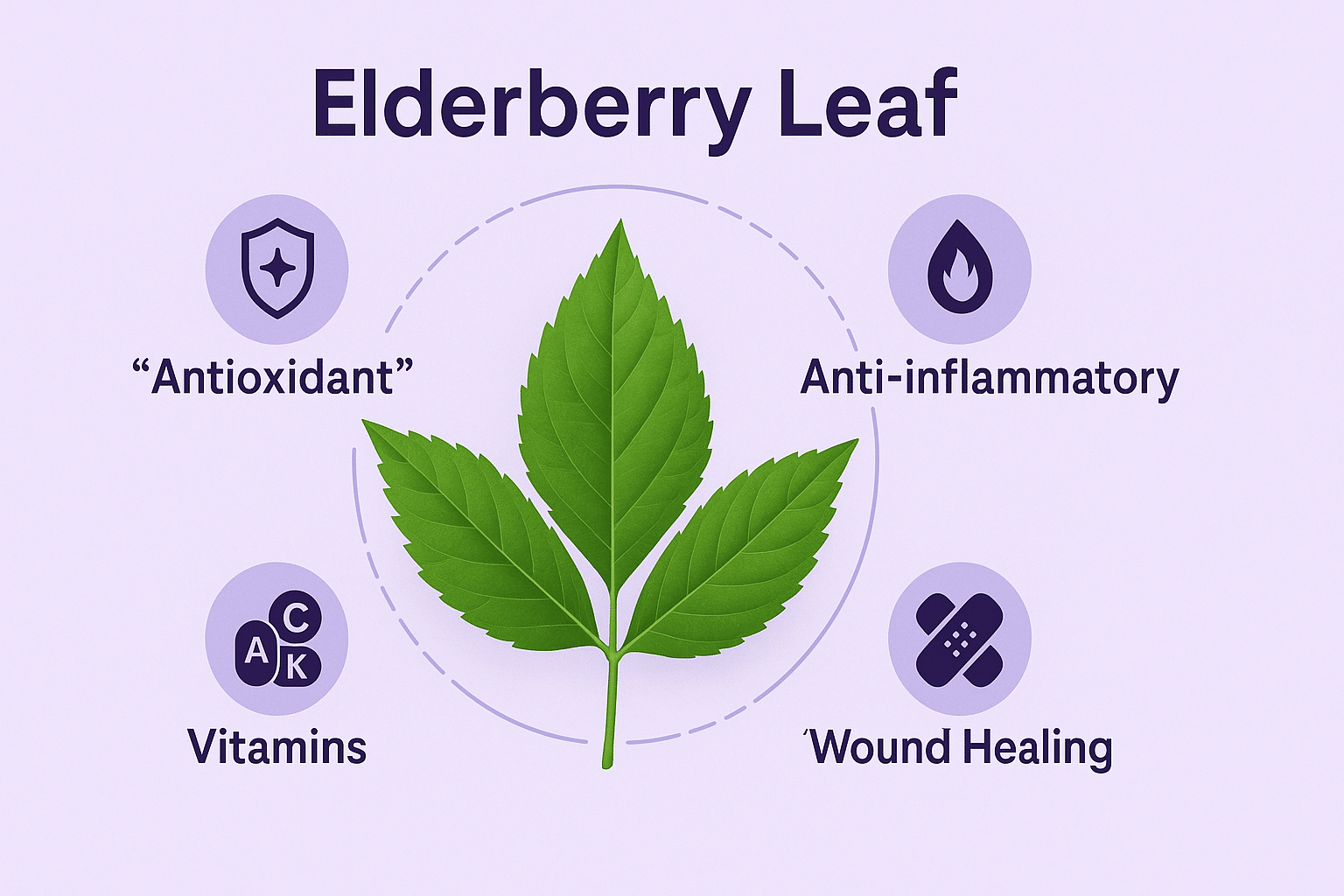
Antioxidant activity. Leaf extracts demonstrate free-radical scavenging in common bench tests. Constituents include phenolic acids (such as chlorogenic acid) and flavonols (quercetin, kaempferol), often described as potent antioxidants. These compounds contribute to the leaf’s ability to neutralize harmful reactive oxygen species in vitro. These antioxidant properties may contribute to the protective effects observed in laboratory studies.
Anti-inflammatory effects. In vitro, elder leaves may inhibit enzymes linked to tissue irritation—such as hyaluronidase and tyrosinase—hence the historical use for pain relief and reducing inflammation on minor, superficial skin concerns.
Traditional topical uses. Elderberry leaves have been steeped in hot water to create external washes for cleansing and soothing skin wounds. A decoction of leaves can be added to bathwater to relieve pain and inflammation associated with rheumatism. Infused elderberry leaf oil is traditionally used to make salves that may soothe sore muscles and aching joints. Crushed leaves have also been applied directly inside the nostril to help stop nosebleeds. These folk medicine applications highlight the leaves’ topical anti-inflammatory and pain-relieving properties.
Wound healing potential. Scientific studies have shown that extracts from certain elderberry leaf varieties can promote skin regeneration and aid wound healing, likely due to their rich polyphenol content, including chlorogenic acid. Some varieties and growth stages demonstrate higher bioactive compound levels, influencing their therapeutic effectiveness. When added to creams, elderberry leaf extract may aid in skin regeneration for burns, supporting traditional uses.
Antimicrobial and antiviral properties. Some studies indicate elderberry leaf extracts exhibit antimicrobial activity against certain bacteria like Salmonella and antiparasitic effects. Methanolic extracts have shown antiviral activity against viruses such as dengue virus (DENV-2), and antiprotozoal potential against Toxoplasma gondii in vitro. Some studies have also explored diuretic effects of elderberry leaves in animal models.
Enzyme inhibition relevant to skin health. Elderberry leaves can inhibit tyrosinase, an enzyme involved in melanin production, which may help reduce skin pigmentation issues. They also inhibit hyaluronidase, which degrades hyaluronic acid important for skin hydration and wound healing.
Chemical composition. Elderberry leaves are rich in polyphenols, predominantly flavonoids such as quercetin, kaempferol, and their derivatives (isoquercetin, rutin, astragalin, myricetin), as well as phenolic acids like chlorogenic acid and neochlorogenic acid. They also contain amino acids and tocopherols. Research has examined several species of elderberry plants, including Sambucus nigra and Sambucus canadensis (American elder), for their bioactive compounds. Elderberry leaves are a rich source of polyphenols and flavonoids, similar to other parts of the plant.
Antioxidant potency varies by variety and growth stage. Older leaves often have higher total polyphenol content but lower flavonoid levels compared to younger leaves. The antioxidant activity measured by radical scavenging and metal ion reduction assays varies accordingly.
Wound healing studies. Extracts from specific elderberry leaf varieties, such as “Golden hybrid,” rich in chlorogenic acid, have demonstrated significant wound closure effects in human skin fibroblast models, supporting traditional uses for skin regeneration.
Safety and toxicity. Despite these promising properties, elderberry leaves contain cyanogenic glycosides that can release toxic hydrogen cyanide if ingested. Therefore, internal use of leaves is not recommended. Topical use should be limited to small amounts on intact skin with proper patch testing.
Lack of clinical trials. There are no robust human clinical studies supporting internal health benefits of elderberry leaves. Most evidence comes from in vitro or animal studies and traditional use.
Elderberry Plant Overview (Sambucus nigra)
Elder is a perennial flowering plant commonly called black elder or European elderberry (Sambucus nigra), which is the most widely studied species. Related species include blue elderberry with blue-black berries. Another important species is the American elder (Sambucus canadensis), native to North America and often used in similar ways. There are several species of elderberry plants, each with similar but distinct properties and health benefits.
As part of a group of medicinal plants, elderberry produces clusters of creamy blossoms during the flowering period, which precede the fruit. The fruits (berries) and flowers are the primary parts used for supplements and traditional remedies due to their rich antioxidant content. When people say “elderberry,” they usually mean the ripe berries—not the leaves.
Benefits of Elderberry vs. Elderberry Leaves
- Benefits of elderberry (berries & flowers). Most research and most elderberry products (e.g., elderberry syrup, some standardized extracts) evaluate cooked berries or flowers for upper respiratory infections, cold and flu symptoms, and general immune health. Elderberry extract, often derived from black elderberry, is studied for its protective effects and health benefit in immune support, with some studies suggesting it may reduce the severity and duration of influenza symptoms. Elderberry wine is a traditional beverage made from the berries, highlighting the culinary and folk uses of elderberry. The research focus on berries and flowers is due to their status as a rich source of antioxidants and bioactive compounds, such as anthocyanins and flavonoids, which contribute to their medicinal properties. Most health benefits attributed to elderberry come from the berries and flowers, not the leaves.
- Leaves are different. Leaves are not used internally in modern integrative medicine or complementary and integrative health because of safety concerns. Keep leaf use topical only (see above).
Immune Health, Cold and Flu Symptoms, and Flu Season
For managing the common cold or flu symptoms, look to elderflower teas and fully cooked berry products—not leaves. Elderberry extract, particularly from black elderberry, has been studied for its potential to reduce the duration of illness and lead to less severe symptoms of cold and flu. Any claims that leaves “support immune health” internally are unsubstantiated. Some studies report improvement in cold and flu symptoms with elderberry extract, but evidence for other symptoms is limited. If your goal is seasonal wellness during flu season, select products that clearly exclude leaves/stems and follow evidence-based directions.
Nutritional Value & Active Ingredients (Context)
You’ll see online lists of vitamins for “elderberry leaves,” but leaves are not a dietary food and shouldn’t be used to add dietary fiber or vitamin C to a diet. Nutrition tables (e.g., for one cup of fruit) apply to berries. Elderberry fruits are a rich source of antioxidants and nutrients, including anthocyanins, flavonoids, and phenolic acids. Diets high in flavonoids and anthocyanins, such as those found in elderberry fruits, are associated with improved health outcomes and reduced risk of heart disease.
For the science-curious:
- Active ingredients studied in leaves include phenolic acids (notably chlorogenic acid) and flavonoids such as quercetin and kaempferol that contribute to measured antioxidant and anti-inflammatory properties.
- These findings do not make leaf preparations safe or suitable as functional foods.
Anti-Inflammatory Properties (Topical, Traditional Use)
In folk medicine, fresh leaves were sometimes crushed into poultices or infused into oils for pain relief or minor skin irritation. If you choose to explore this tradition:
- Use small amounts on intact skin only; patch test first.
- Label any preparation “external use only.”
- Discontinue at any sign of irritation.
Do not use leaf preparations to treat severe symptoms or as a substitute for care for upper respiratory infections or treating influenza—see a clinician.
Safety: Raw Elderberries, Unripe Berries & Cyanogenic Glycosides
- Leaves, stems, bark = off limits internally. They contain cyanogenic glycosides and have been associated with illness when included in beverages.
- Raw elderberries and unripe berries can also cause stomach upset; uncooked berries are not advised. Culinary use requires fully cooked ripe berries prepared without leaves/stems.
- Historical mentions of using parts of the plant to induce vomiting reflect the irritant/toxic potential—not a recommended practice.
- People with heart disease, high blood pressure, pregnancy/lactation, or children should avoid experimental use of leaves and seek professional guidance for any herbal plan. Additionally, some animal studies suggest elderberry leaves may have diuretic effects, which could interact with diuretic medications and warrant caution.
Heart Health & Other Benefits (What’s Being Studied)
You may see references to heart health elderberry, blood pressure, or uric acid in the context of elderberry. Some studies have also explored elderberry’s potential to influence cholesterol levels, which are important markers for cardiovascular health, but results are mixed and more research is needed. Those signals—when present—generally come from berries or flowers in small trials with a control group, and results are mixed. For elderberry leaves, there’s insufficient evidence; further studies and further research are needed before making claims.
Elderberry Leaves in Integrative Health Today
Within integrative health and natural remedies, best practice is:
- Internal use = elderflower or cooked berry preparations from reputable brands; check labels for species (Sambucus nigra) and part used.
- External (optional) = conservative, small-batch leaf preparations for the skin only, with clear safety labeling.
Dietary Supplements & Elderberry Products
If you shop for dietary supplements, choose products that specify berries or flowers, not leaves. Elderberry extract, especially from black elderberry, is a popular supplement form for immune support. Review quality markers, batch testing, and part-used statements. Avoid products that list leaves among ingredients.
Practical Topical-Only Preparation (External Use Only)
Elder Leaf–Infused Oil
- 1 part freshly wilted or dried elderberry leaves (woody stem removed) to ~5 parts carrier oil.
- Warm gently in a double boiler for 1–2 hours; do not simmer.
- Fine-filter; label EXTERNAL USE ONLY.
- Patch test; do not apply to broken skin. Avoid use in pregnancy/lactation and in children unless advised by a clinician.
Wound-Healing Potential of Elderberry Leaves
Elderberry leaves have a long history in folk medicine for treating various diseases, particularly those involving the skin. Traditional healers often used poultices or infusions made from elderberry leaves to soothe inflammation, reduce pain, and promote the healing of wounds and minor skin irritations. The wound-healing potential of elderberry leaves is largely attributed to their rich content of phenolic acids and flavonoids—compounds known for their anti-inflammatory effects and potent antioxidant activity.
Scientific studies on the European elderberry (Sambucus nigra) have shown that extracts from the leaves can support wound healing by encouraging fibroblast proliferation and migration, which are key steps in the skin’s natural repair process. These anti-inflammatory and antimicrobial properties may help reduce swelling, minimize infection risk, and speed up recovery. The presence of phenolic acids, such as chlorogenic acid, further enhances the leaves’ ability to protect and regenerate skin tissue.
While these findings are promising, it’s important to note that most research has been conducted in laboratory settings or animal models. Further studies are needed to fully understand how elderberry leaves might be used in complementary and integrative health practices for wound care in humans. If you’re interested in exploring elderberry leaves for their wound-healing benefits, always use them externally and consult with a healthcare provider, especially if you have underlying health conditions or are considering integrative health approaches.
Dosage and Administration Guidelines
When it comes to taking elderberry supplements, following proper dosage and administration guidelines is key to maximizing health benefits and minimizing risks. Elderberry syrup is one of the most popular forms, often used to help manage cold and flu symptoms. Typical adult dosages range from 1 to 2 tablespoons per day during cold and flu season, but always check the product label for specific instructions. Elderberry juice can also be consumed, with up to one cup per day being common for general immune system support.
If you’re considering elderberry supplements for their potential to reduce flu symptoms, support heart health, or boost your immune system, it’s essential to consult with a healthcare provider first. This is especially important if you have existing health conditions, are pregnant or breastfeeding, or are taking other medications. Your healthcare provider can help you determine the most appropriate dosage and ensure that elderberry products are safe for your individual needs.
Always choose high-quality elderberry supplements from reputable manufacturers, and look for products that clearly state they use berries or flowers—not leaves or stems. This helps ensure purity, potency, and safety. By following these guidelines, you can confidently incorporate elderberry syrup, elderberry juice, or other elderberry supplements into your wellness routine and enjoy their potential health benefits for immune support, heart health, and overall well-being.
FAQs
Are elderberry leaves safe to consume?
No. Because of cyanogenic glycosides, do not drink elderberry juice, teas, tinctures, or smoothies made from leaves. Internal use should focus on flowers or fully cooked berries.
Can elderberry leaves help with cold and flu?
There’s no clinical evidence for leaves. For cold and flu or symptom improvement, any evidence pertains to cooked berries or elderflowers, not leaves.
Do elderberry leaves have anti-inflammatory effects?
Lab studies report anti-inflammatory effects and antioxidant activity, which may explain historical topical uses. That doesn’t translate into safe internal use.
What about heart health or blood pressure?
Small studies of berries have explored heart health endpoints (e.g., blood pressure, uric acid), but data are preliminary. Leaves have not been validated.
Which part of the elder tree should I use?
For internal preparations, choose elderberry flowers or fully cooked berries (no leaves/stems). Keep leaves for external-only experimentation, if at all.
- The phrase elderberry leaves benefits usually reflects antioxidant properties and anti-inflammatory effects demonstrated in preclinical work plus folk medicine for skin.
- For internal immune health, cold and flu symptoms, or treating influenza, rely on elderflower or fully cooked berry products—not leaves.
- Prioritize safety: avoid ingesting leaves, respect the plant’s chemistry (cyanogenic glycosides), and look for high-quality, clearly labeled elderberry products if supplementing.
References
- Skowrońska, A., et al. (2023). Phytochemical Composition and Biological Activity of Elderberry (Sambucus nigra L.) Leaves: Antioxidant, Anti-Inflammatory, and Wound Healing Potential. Biomolecules, 13(5), 618. https://doi.org/10.3390/biom13050618
- Healthline. (2023). The Pros and Cons of Elderberry. Retrieved from https://www.healthline.com/nutrition/elderberry
- National Center for Complementary and Integrative Health. (2022). Elderberry. https://www.nccih.nih.gov/health/elderberry
- Health.com. (2023). Can elderberry really shorten a cold? Here’s what the science says. https://www.health.com/health-benefits-of-elderberry-7506026
- Water.com. (2023). The Positive Health Benefits of Elderberry. https://www.water.com/education/the-positive-health-benefits-of-elderberry
- Memorial Sloan Kettering Cancer Center. (2023). Elderberry. https://www.mskcc.org/cancer-care/integrative-medicine/herbs/elderberry-01
- Tundis, R., et al. (2019). Chemical Characterization and Biological Activity of Elderberry (Sambucus nigra L.) Leaves. J Agric Food Chem, 67(23), 6489–6498. https://doi.org/10.1021/acs.jafc.9b02115
- Nurzyńska-Wierdak, R., et al. (2022). Chemical Composition and Antioxidant Activity of Elderberry (Sambucus nigra L.) Leaves. Agric Food Chem, 70(10), 3124–3132. https://doi.org/10.1021/acs.jafc.1c07045
- Plech, T., et al. (2023). Antioxidant and Anti-Inflammatory Potential of Extracts from Elderberry Leaves of Different Varieties. BMC Complement Med Ther, 23, 110. https://doi.org/10.1186/s12906-023-03845-2
- FDA. (2020). Warning Letters and Test Results for Elderberry Products. https://www.fda.gov/inspections-compliance-enforcement-and-criminal-investigations/warning-letters

Reviewed by: Press On Staff • Last reviewed: October 2025
Editorial policy · Sourcing & citations · Contact
Disclaimer: Educational content. Not medical advice.
Masterful Display
Each and everyone of our products are deeply considered, labored over, and improved upon time and time again. We invite you to experience the difference of our carefully crafted small batches of herbal support items. Whether it be our tea line, produced for a delightful experience, or our tincture blends and extracts, we have what you need.
