
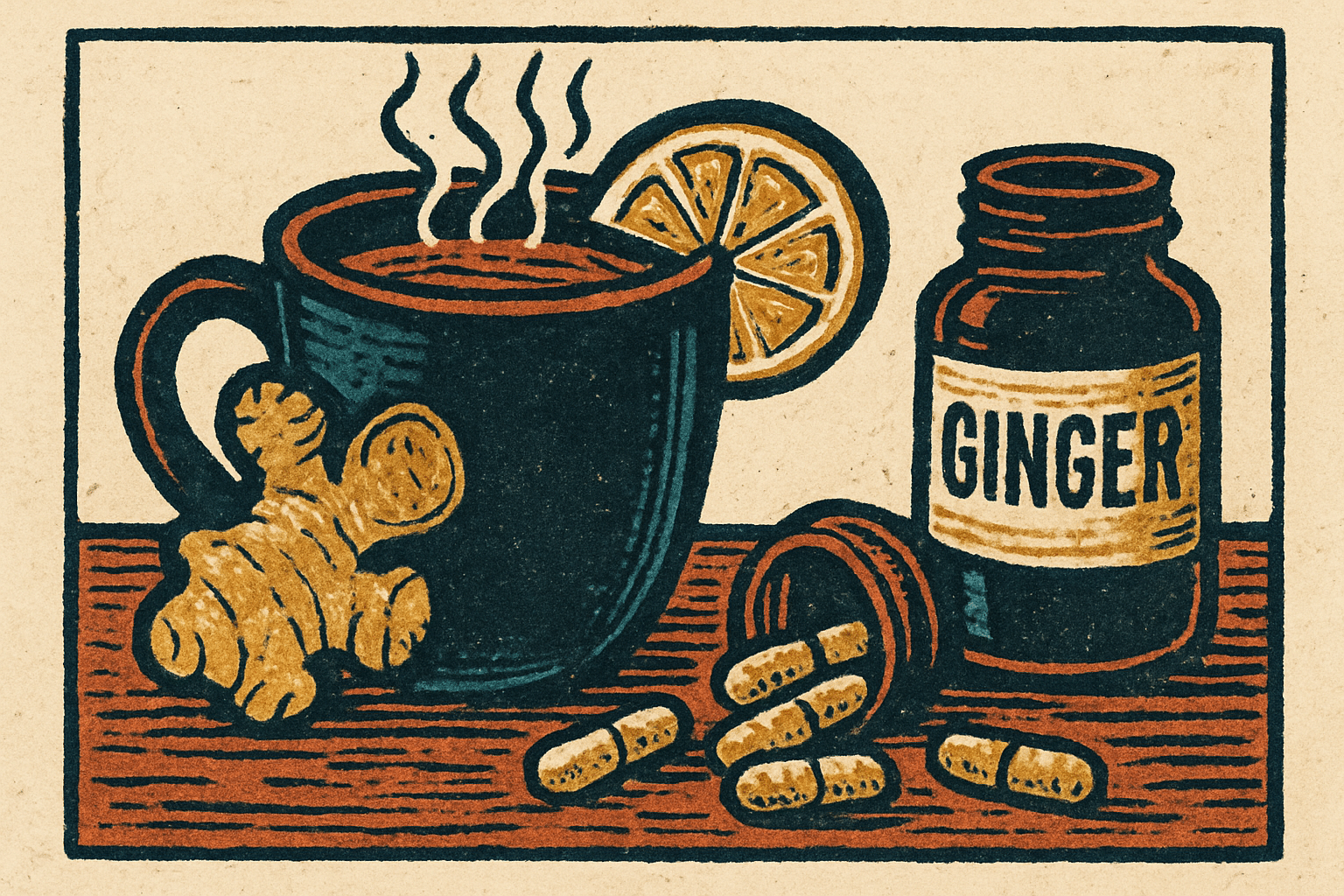
Ginger tea vs ginger capsules is a common comparison for people deciding how to add ginger to their routine. Ginger comes from a tropical flowering plant, Zingiber officinale, and is used in many forms: fresh ginger, ginger powder, dried ginger, ginger supplements, candied ginger, and ginger chews. Each option delivers slightly different effects of ginger, flavor, and convenience.
Fresh Ginger
Fresh ginger root is widely available in grocery stores. It has a spicy aroma and is often grated ginger or sliced ginger for cooking or preparing ginger tea. Fresh root can be simmered in hot water, added to stir fries or savory dishes, mixed with soy sauce and olive oil, or used in pickled ginger. Eating ginger or using fresh ginger gives a strong flavor and allows you to adjust potency.
Ginger Powder
Ginger powder is dried or powdered ginger ground into a fine texture. Powdered ginger and ground ginger are convenient options for making ginger tea or adding to savory foods. Ginger powder can add flavor to stir fry or ginger paste blends. A small amount is usually enough to season soups or stews. This powdered form has a longer shelf life than fresh root.
Ginger Root
Ginger root, also called fresh ginger root, is used in traditional Chinese medicine and complementary and integrative health practices. It has many health benefits attributed to plant compounds with anti inflammatory effects. Some people use ginger root tea for nausea and vomiting, motion sickness, relieve menstrual pain, upset stomach, or joint pain. While ginger may help relieve pain and nausea relief, ginger is not a replacement for nonsteroidal anti inflammatory drugs.
Ginger Supplements
Ginger supplements come in capsule form, containing ginger extract or powdered form ginger. Ginger extract may be more concentrated, and ginger supplementation can offer a consistent dose. Ginger capsules are convenient when someone prefers not to eat ginger or prepare tea. Ginger supplements may support nausea relief and alleviate symptoms of menstrual cramps. However, too much ginger can cause stomach upset.
Ginger Supplement
A ginger supplement may appeal to those who want predictable strength. Ginger supplementation studies show varied effects of ginger on blood sugar, pain relief, and body weight. Pregnant women should speak with a clinician before taking ginger supplements.
Dried Ginger
Dried ginger is made by dehydrating fresh ginger root. It can be ground into ginger powder or used in cooking. Dry ginger is commonly added to savory dishes or herbal blends. Dried ginger can be used to make ginger tea when fresh root is unavailable.
Eat Ginger
You can eat ginger in many ways. Eating ginger raw provides strong flavor, while candied ginger or ginger candy offers a sweet form. Pickled ginger is served with savory foods like sushi. Ginger ale or ginger beer are beverage options, but they usually contain sugar. If consuming ginger for potential health benefits, consider fresh or powdered forms rather than sweetened drinks.
Blood Sugar
Ginger has been studied for its effects on blood sugar and fasting blood sugar. Some research suggests ginger supplementation may support blood sugar control in overweight and obese subjects, though results vary. People with diabetes or blood sugar concerns should use caution with ginger consumption and work with a clinician.
Blood Pressure
The effects of ginger on blood pressure are mixed. Ginger tea and ginger capsules may influence circulation, though findings vary. Some individuals with hypertension or taking blood thinning medications should consult a healthcare professional. Ginger may have a mild effect on lowering blood pressure, but it is not a substitute for prescribed therapy.
Benefits of Ginger
The benefits of ginger include its aromatic flavor and use in herbal traditions. Ginger tea or ginger capsules may support digestive comfort, nausea relief, and pain relief from muscle soreness. Ginger has anti inflammatory properties and has been explored for relieve menstrual pain, reduce muscle pain, and joint pain. Research continues to explore additional potential health benefits of ginger, though ginger is not a treatment for chronic illness.
Effects of Ginger
The effects of ginger are attributed to natural compounds. Studies report ginger may relieve nausea, treat nausea associated with motion sickness or pregnancy-related discomfort, and soothe an upset stomach. Ginger extract has also been examined for postoperative nausea. Although ginger intake may help alleviate symptoms in some cases, evidence varies, and ginger should be used as part of a balanced diet rather than a replacement for clinical care.
References
- Black CD et al. “Ginger and Muscle Pain.” Journal of Pain.
- Daily JW et al. “Ginger and Metabolic Health.” International Journal of Preventive Medicine.
- Marx W et al. “Ginger and Inflammation: Clinical Review.” Food & Function.
- Memorial Sloan Kettering Cancer Center. Ginger Monograph.
- Thomson M et al. “Zingiber officinale Review.” Phytotherapy Research.

Reviewed by: Press On Staff • Last reviewed: November 2025
Editorial policy · Sourcing & citations · Contact
Disclaimer: Educational content. Not medical advice.
Further reading on Ginger
Main
Tea & How-To
Recipes & DIY
Safety & Interactions
Benefits by Topic
Traditions
Masterful Display
Each and everyone of our products are deeply considered, labored over, and improved upon time and time again. We invite you to experience the difference of our carefully crafted small batches of herbal support items. Whether it be our tea line, produced for a delightful experience, or our tincture blends and extracts, we have what you need.
